






















Stake Cricket India: IPL Markets, Match Formats and Results
Cricket settlement depends on more than the final scoreboard. Match format, innings scope, rain adjustments and player participation can all affect what a selection means. This Stake cricket guide examines those details for IPL, domestic and international contexts, translating fictional returns into ₹ and showing how to keep a clear match record in IST.
English · IndiaINR ₹ examplesIST · UTC+05:30India legal status
The examples explain sportsbook mechanics for lawful, eligible use. They do not establish Indian access to real-money betting. Start with the current India position and use official support for an existing account or transaction.

Read the match through its format
T20, ODI and Test cricket organise innings and match time differently. Limited-overs formats generally give each side a scheduled innings allocation, while a Test can span multiple innings and end in a draw. Those structural differences affect scoring pace, interruptions and what a match-result market can mean; identify the format before reading the price.
Do not infer the format from the team names alone. International sides and domestic clubs can appear in different competitions and formats across a season. Read the competition and event details.
| Format | Useful context | Market detail to verify |
|---|---|---|
| T20 | A short innings makes individual overs influential. | The specified innings, powerplay or over |
| ODI | Longer innings create different batting and bowling phases. | The scheduled overs and interruption conditions |
| Test or first-class | Time, multiple innings and draws matter. | Whether the selection concerns the match or one innings |
Use the current fixture page for schedules. An evergreen guide cannot tell you which competition or market is live at the moment you open it.
T20, ODI and Test cricket create different questions
A T20 match compresses the innings into a short format, so a small number of deliveries can change the required scoring rate quickly. An ODI gives more room for phases of accumulation and acceleration. A Test match introduces multiple innings and the possibility that time, rather than the completion of all innings, determines the final situation.
Those differences affect how a market should be read. A match-result selection, an innings total and a player milestone concern different scopes. A team can post a strong first-innings score without winning the match, and a player can satisfy a statistical market while the team loses.
Identify the competition and format in the accepted ticket. Similar team names can appear across different squads or competitions. A shortened match can also change the practical context without automatically changing every settlement rule in the same way.
For a multi-day match, examine whether a draw is an available outcome in the chosen market. A two-way market and a three-way market cannot be compared only by looking at the team prices. Their outcome sets may be different.
The format is therefore the first filter, not a complete forecast. It tells you which rules and match phases deserve attention before any price is assessed.
Read overs notation correctly
Cricket overs notation is not ordinary decimal notation. A score shown after 12.3 overs means twelve complete overs and three legal balls of the next over. It does not mean twelve and three-tenths overs. With six legal balls per over, 12.3 represents 75 legal deliveries.
This matters when checking rates or a market tied to a particular number of overs. Treating 12.3 as a decimal can produce the wrong calculation. Convert the completed overs and remaining balls into legal deliveries before doing arithmetic that requires a precise fraction.
Illegal deliveries and extra runs can complicate a quick reading. A wide can add to the score without consuming a legal ball. A no-ball has its own scoring and delivery consequences under the applicable cricket rules. The official score and market definitions determine how a particular statistic is counted.
For a simple illustration, 90 runs after 15 complete overs gives a run rate of six per over. Ninety runs after 14 overs and three legal balls uses 14.5 overs for that arithmetic, not 14.3. The distinction is small on the screen but meaningful in a calculation.
When reviewing a settled ticket, use the official recorded score for the market's cut-off. A live display captured between updates may not reflect the final corrected delivery record.
Match the selection to its precise cricket scope
A ticket may concern the winner of the match, one team’s innings total or an individual player’s statistic. Those outcomes can be related without being identical. Read the named innings, participant and participation conditions so that you compare the selection with the relevant part of the scorecard instead of only the overall result.
- Match winner: check the official-result and tie treatment.
- Innings total: identify the team and innings.
- Over total: confirm the over number and how the market treats interruptions or incomplete overs.
- Batter runs: read participation, innings and dismissal conditions.
- Bowler wickets: inspect what counts and which innings applies.
- Tournament outright: distinguish the event winner from an individual match result.
A short label in the event list can omit these details. Open the market and read the complete wording before comparing its odds with another selection.
Team totals, innings totals and partnerships
A team total usually concerns the named team's score within the specified scope. An innings total concerns a particular innings. In formats with more than one innings per side, that wording is essential. A selection on the first innings should not be evaluated against the team's combined match runs.
A partnership market concerns the score accumulated by a particular batting pair or wicket interval under the market definition. It is different from either batter's personal score. Extras can contribute to the team partnership even though they are not all credited as runs to an individual batter.
For an over market, identify the exact over and what counts toward its total. A live screen can move to the next over while an earlier market remains in history. The accepted ticket's label is the reliable way to identify the scope.
Half-run lines avoid an exact numerical tie at that line, while integer lines can have a push or other treatment under the rules. Read the settlement conditions rather than assuming every total is a simple win-or-loss proposition.
Player and team markets can also have different participation requirements. A batter who never comes to the crease creates a different question from a batter who appears and scores zero. The current sportsbook rules define the outcome for each market type.
Turn cricket odds into stake, return and profit
On an ordinary winning cash single, decimal odds multiply the stake to produce the total paid back. For example, a 20-unit stake at 2.30 returns 46 units, of which 20 restores the stake and 26 is profit. Keep promotional bet rules separate, as their treatment of the original stake may differ.
For a total of 164.5 runs, an over selection requires at least 165 runs within the market's defined scope. A whole-number line can allow a push under the applicable rules. Do not treat 164.5 and 165.0 as identical.
A higher price indicates a different offered trade-off between probability and return. It does not tell you that a selection is underpriced. Compare the same market definition before drawing conclusions from two prices.
Check the age and status of team information
A confirmed XI is more precise evidence than an expected lineup, and a current venue report is more useful than a description from a previous season. Read the format, venue, toss and team news together, noting when each was published. None of those details should be silently upgraded from expectation to confirmation.
Separate an explanation from a prediction. A pitch associated with high scores does not guarantee the next innings total. Weather can change the scheduled contest without telling you exactly how the bookmaker will settle every market.
If important information remains uncertain, that uncertainty belongs in your assessment. You do not need to convert every match you follow into a wager.
A useful pre-match information sequence
Begin by confirming the fixture, venue, format and scheduled teams. Then distinguish confirmed information from projections. A predicted lineup is not the same as an announced playing side, and a weather forecast is not the same as an actual interruption.

The toss can clarify which side bats first, but it does not settle the match result. Conditions can change, and the usefulness of a venue trend depends on the competition and sample being compared. Avoid treating one historical average as a guarantee for a different match.
For a player market, check participation and role. A player listed in a squad may not be selected, and a selected player may bat in a different position or bowl fewer overs than expected. These facts can affect the opportunity to reach a statistic without changing the player's underlying ability.
Separate observation from inference in your notes. “The player is in the announced side” is an observation. “The player will face more deliveries today” is an inference that may or may not prove correct. Keeping that distinction visible makes a later review more honest.
Finally, read the market-specific rules before comparing the price. A well-researched prediction can still be attached to the wrong market if the period, participation condition or tie treatment was misunderstood.
Understand why the live market moves before the picture
A cricket broadcast can lag behind the match and the data used to manage the market. Suspension around a boundary or wicket may therefore happen before that delivery appears on your screen. Do not interpret the visible ball as a real-time opportunity or assume that a delayed animation proves the bookmaker processed the wrong event.
Inspect the current innings, score and market line in the bet slip, then check the accepted record after submission. A price visible before a delivery does not establish the price the system later accepted.
Do not submit repeatedly when the interface pauses. An accepted wager can exist even when the confirmation animation fails. Check account history before making a second request.
Follow a chase without confusing score and settlement
Imagine a fictional chase where a team needs 60 runs from 30 legal balls. The required rate is 12 runs per over. A boundary reduces the runs needed, while a wicket can change who is batting and the remaining resources. The scoreboard provides the current state, but the price reflects the bookmaker's assessment of what may happen next.
A video stream may show the boundary after the market has already moved. A customer who reacts to the broadcast is not necessarily acting on information newer than the price. Confirm the accepted odds and ticket rather than comparing them only with the delayed picture.
Now suppose rain stops play. The match may resume with a changed target or reduced overs under the competition's procedures. The market's settlement rules determine whether the wager remains valid and which official result or statistic applies. A changed target does not produce one universal outcome for every ticket.
A player-runs market might already be settled, an innings market might depend on completion conditions, and a match-winner market might follow the official result under its rules. Keep those tickets separate when interpreting the interruption.
This example shows why a live cricket review should connect the scoreboard, market scope and accepted ticket. None of the three alone answers every settlement question.
Separate the official result from each statistical market
Stake’s published cricket rules refer to competition-approved result methods, including DLS or VJD where relevant. The treatment of the official match winner is not automatically the treatment of every runs, boundary or player selection. Inspect the interrupted-match provision for the particular market before concluding that all tickets must share one outcome.
Read the exact market's minimum-overs and interruption conditions. A market may already have a definite result before the interruption; another may depend on the remaining scheduled play. A single sentence such as “rain means a refund” is too broad.
For example, an over selection on a total that the team has already passed can raise a different settlement question from an under selection on an innings cut short. The operator's market rule determines the treatment. Do not substitute your own assumption for that rule.
Keep the accepted line and the time of the wager. Pre-match and in-play conditions can refer to different scheduled-overs information, and that context may matter in a support discussion.
Rain, revised targets and abandoned matches
Rain affects both the sporting contest and the betting contract, but through different mechanisms. Competition rules determine how play resumes or an official result is reached. Sportsbook rules determine how the selected market uses that outcome.
A revised target under an applicable method is not simply the original target scaled by time in a way a reader should improvise. Use the official match information. A homemade proportional calculation can be wrong because the sporting method considers factors beyond a simple fraction of overs.
For settlement, inspect any minimum-play requirement and the treatment of a declared result. Some markets can be determined before the match ends, while others depend on a completed innings or another defined condition. The rule for match winner should not be copied automatically to player statistics.
If a match is abandoned, read the ticket status and the relevant rule. “No result” in the sporting record and “void” in the betting record are related terms in some circumstances, but they should not be treated as interchangeable without checking the market.
Keep the event identifier, interruption details and accepted market label when asking support. A screenshot saying only “rain delay” does not establish whether the required condition had already been met.
Check which markets include a Super Over
A Super Over may determine the competition’s winner without contributing to every statistical selection. The operator’s cricket rules explicitly exclude Super Over events from several player, run and boundary markets. Match the particular rule to the ticket rather than extending the match-winner result to every number shown on the final scorecard.
Check whether you selected the match winner, regulation-stage result or a separate statistic. The same final match can produce different outcomes for those tickets without a contradiction.
For a Test, read whether the market includes the draw as a separate outcome. A tied match and a drawn match are not interchangeable concepts in cricket.
A tie and a Super Over can create several results
A tied scheduled match can be followed by a tie-breaking procedure under the competition rules. The eventual competition winner is one fact. The score and statistics from the scheduled innings are another. A market can refer to either scope depending on its wording and rules.
Do not add Super Over runs to a player's ordinary match statistic unless the market explicitly includes them. Similarly, a selection concerning the scheduled innings should not automatically inherit the result of a later tie-break.
A two-way winner market and a market offering a tie as a separate outcome can differ in how they treat the same match. Read the accepted product rather than relying on the generic phrase “match winner” from a promotional page.
When comparing a settlement, write the question precisely: did the market include the tie-break, did it offer a tie outcome, and what official result does the relevant rule use? Those questions identify the actual source of disagreement.
The linked sportsbook rules provide the current details. This guide explains why the distinction matters without assuming a single treatment across all cricket markets.
Read player participation conditions before assigning a result
A named player might not bat, might retire hurt, might enter as a substitute or might never bowl. Those cases require the relevant market’s participation and innings conditions. Do not automatically substitute a zero in the calculation: the rule may determine whether the selection stands, becomes void or settles another way.
For bowling statistics, distinguish a wicket credited to the bowler from another dismissal such as a run-out. For batting totals, identify which innings counts. A first-innings market does not accumulate every run from a multi-innings match.
If the operator settles unexpectedly, collect the accepted selection and the official scorecard. Ask which participation or scoring rule it applied.
Example: a batter selected but never required to bat
Imagine a fictional team completes a successful chase before a selected middle-order batter reaches the crease. The player was part of the announced side, but did not bat. A market concerning that player's runs now depends on its participation and settlement rules.
It would be incorrect to assume that selection in the team always means the same thing as participation in the relevant market. It would also be incorrect to assume that every unplayed player market is treated identically across sportsbooks and products. The exact rule must be checked.
Compare this with a batter who comes to the crease and is dismissed without scoring. The score may be zero in both a casual summary and an unplayed entry, but the sporting events are different. A market can distinguish them because its condition concerns whether the player actually took part in the required way.
The accepted ticket should identify the player, statistic, line and event. The official scorecard supplies the relevant participation record. Together with the sportsbook rule, those records allow support to explain the result.
A similar distinction can arise with a bowler who is selected but does not deliver an over, or a substitute whose role differs from the original selection. Do not infer the settlement from a team sheet alone.
This example illustrates why detailed cricket content needs more than a list of popular markets. The usefulness lies in connecting a familiar sporting situation to the precise wording of the bet. Read that wording before evaluating the price, and retain it when reviewing the result.
Use the tournament to organise the cricket record

An IPL match, a domestic fixture and an international series sit within different schedules and competition structures. A tournament can also offer individual-match selections and longer-term outrights. Record which level the ticket concerns so that a correct result in one match is not confused with winning a tournament-wide market.
Keep those time horizons separate. A tournament-winner ticket can remain open through many fixtures, while a single-over market resolves quickly. The duration affects how long funds remain committed and what information can change before settlement.
Check the current sportsbook for actual coverage. Do not assume a named competition in a guide guarantees every match, player proposition or live stream will appear.
Use leagues and tournaments as navigation filters
Competitions help organise a crowded sportsbook. International matches, domestic leagues and shorter tournament stages can be grouped separately, allowing you to find the correct fixture and format more quickly. A familiar competition name is a useful starting point, but not proof that a specific market is currently offered.
Check the event date and team designation carefully. Women's teams, age-group sides, reserve teams and similarly named clubs can appear near one another. A shortened mobile label can hide the distinction until the event page or bet slip is expanded.
Tournament-stage markets also differ from individual-match markets. Winning a group, reaching a final and winning a championship require different outcomes. A single match loss may or may not eliminate a team from a tournament proposition.
A schedule in a saved screenshot is historical. Use the current event screen for start times and availability rather than treating the reference image as a live fixture list. Our illustrations preserve the original site's visual material while the text explains how to read it.
Each additional cricket leg adds another condition
A multi-leg ticket combines the requirements of its active selections under the applicable settlement rules. Choices that appear reasonable separately do not retain the same combined likelihood. Review how voids, correlated outcomes and interrupted matches are handled, then distinguish the attractive total price from the probability of satisfying every required leg.
Selections within one match can be correlated. A high team total and a strong performance from an opening batter may not behave like independent events. Use the platform's quoted combined price and read the Same Game Multi conditions where that product is offered.
Check how a void leg affects the specific ticket type. An ordinary multi and a same-event combination may not use identical treatment.
Do not assume an exit before the next wicket
A cashout quote is conditional on the current event and market. It can be withdrawn during a suspension, and a submitted request may fail before completion. Rain, a wicket or another material change can remove the option. Reading an available quote is different from having an accepted early settlement in the account record.
If cashout succeeds, inspect the confirmed amount in account history. Compare it with the total stake to understand the net result. A promotional ticket can have additional conditions.
Read the complete cricket selection on the phone
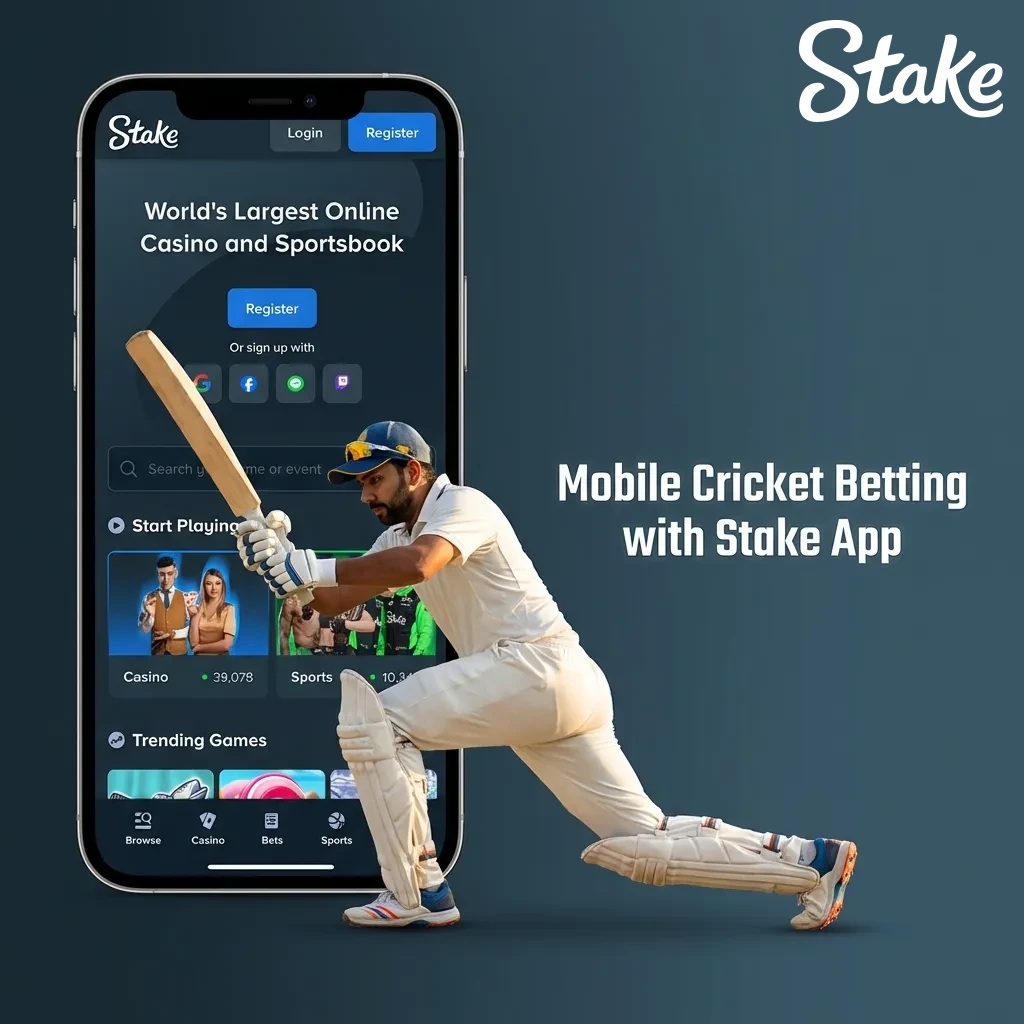
Expand shortened market labels until the innings, player and line are visible. A small-screen abbreviation can hide the very detail that distinguishes one wager from another. Confirm the full accepted ticket after submission and preserve the original wording if you later need to compare it with the rules or scorecard.
When you return from a stream or another app, allow the market to update. Do not rely on the price left on screen before the switch. The mobile guide explains browser access and session troubleshooting.
Judge the ticket and the promotion separately
A cricket campaign can specify qualifying odds, selected competitions and a deadline by which the ticket must settle. It may also treat cashout differently. Check those requirements alongside the market itself. Recognising a team in the promotional artwork does not establish that every ticket involving that team qualifies.

Set the amount you are prepared to lose independently of a promotion or earlier result. Avoid increasing a stake because a previous innings disappointed you. The next selection does not inherit a duty to recover the loss.
Use our bonus guide for offer calculations and sportsbook guide for general odds and ticket mechanics.
Review a cricket ticket after the event
Save the accepted stake, odds, full market label and event identifier. Then locate the official statistic or result relevant to that market. For a player selection, confirm the participation rule; for a period selection, use that period rather than the final match total.
Recalculate a successful single using stake multiplied by decimal odds, remembering that the return includes the stake. For a multi, inspect each leg's status and any void treatment. A changed combined return may follow from one leg being removed under the applicable rules.
If the result remains unclear, ask support to identify the rule and settlement source used. Present one ticket and one precise discrepancy. This is easier to investigate than a general claim that the score looked different on a delayed stream.
Use the explanation to improve market reading, not to invent a guarantee of future results. The most useful lesson from a settled ticket is often a clearer understanding of its scope.
A match record for IPL, WPL and India fixtures
Start the record with the competition and format rather than the best-known team or venue. IPL, WPL, bilateral internationals and domestic cricket can appear together in search results. A reference to Wankhede, Eden Gardens or M. Chinnaswamy supplies context, but it does not prove that last season’s pitch description or expected lineup applies to the current fixture.
- Confirm the fixture: teams, competition, match number, venue and full date.
- Convert the start to IST: India uses UTC+05:30. A fictional 14:00 UTC start means 19:30 IST; recheck the date for late UTC starts.
- Keep the toss and XI separate: a predicted lineup is not the confirmed playing XI. Note when the information was published.
- Save the exact market: match winner, innings runs and player performance have separate conditions.
- Read interruption rules: a revised DLS target does not automatically tell you how every sportsbook market settles.
Consider a fictional ₹250 ticket at odds of 2.40. A winning settlement returns ₹600 including the stake, a profit of ₹350. If the market is void and its rules return the original stake, the return is ₹250 with no profit. A successful match prediction and a paid bet are different questions when the minimum-overs or participation condition has not been met.
Keep this record in English if that is the language of the operator’s rule, while retaining team names and the original ticket ID exactly. A translated description can accidentally change “match” to “innings”. This analysis supports understanding of the international product; India’s money-gaming restrictions remain a separate threshold.
Questions about Stake cricket
Does rain automatically cancel all cricket-market settlements?
No single answer covers every ticket. Match completion rules, reduced overs, completed innings and already determined outcomes can have different consequences under the applicable market terms.
Are Super Over statistics automatically included in player markets?
Do not assume they are. A match-winner rule can treat a tie-break differently from an innings or player-statistic market, so check the scope stated for each selection.
What score clears an innings total of over 164.5?
For that specified innings, 165 or more clears the numerical line. The ticket’s other conditions still matter, including whether the innings and market qualify for settlement.
Can a delayed live stream be used to confirm the accepted price?
The recorded odds on the accepted ticket are the reference. Streaming latency can make the picture appear behind events and does not lock in a price that was visible earlier.
Does a player who never bats necessarily record zero for settlement?
Participation requirements can determine whether the bet stands or is void. Read the particular player-market rule instead of treating an absent score as an automatic settled zero.
Which cricket details belong in a settlement complaint?
Identify the match and format, innings, exact player or team market, bet ID and accepted line. Include any rain revision or tie-break context, plus the displayed result and the applicable rule.
The editorial basis for this guide
Garry Anderson · Editorial author
Stakebet India connects the operator’s published explanations with worked examples for Indian readers. The credited author is Garry Anderson. Examples show how to interpret rules and records; neither a numerical scenario nor a reference screenshot represents a newly tested account or a promised outcome.